
PRE-SERVICE FOREIGN LANGUAGE TEACHERS’ SELF-ASSESSED METHODOLOGICAL READINESS TO USE AUTHENTIC MATERIALS: A DESCRIPTIVE STUDY
INTRODUCTION
Contemporary foreign language education is developing under the influence of globalization, digitalization, and the growing demand for communication in real sociocultural and professional contexts. These changes have transformed the role of the foreign language teacher from a transmitter of standardized language knowledge into a facilitator of meaningful communicative experiences. As a result, teacher education programs are increasingly expected to prepare future teachers to work with materials that reflect authentic language use.
Authentic materials are commonly understood as texts and media created for genuine communicative purposes and used beyond exclusively pedagogical contexts. Their value lies in the opportunity to expose learners to natural language use, contextualized meaning, and current discourse practices. However, the mere inclusion of authentic materials in instructional settings does not automatically lead to effective learning outcomes. Their pedagogical potential depends on how such materials are selected, adapted, and integrated into classroom practice.
A key factor shaping this process is methodological readiness. Pre-service foreign language teachers may express positive attitudes toward authentic materials and encounter them frequently in everyday digital environments. Nevertheless, regular exposure does not necessarily translate into confidence in selecting, adapting, and using these resources for pedagogical purposes. Authentic texts may present linguistic density, implicit cultural references, and discourse features that require careful mediation in accordance with learners’ proficiency levels and instructional objectives.
Within competence-based models of teacher education, methodological readiness can be approached as an integrated professional capacity that supports informed instructional decisions in real classroom contexts. It includes the ability to evaluate learning materials, align them with pedagogical aims, adapt content to learner needs, and design tasks that support meaningful communication. In the present study, this construct is examined through participants’ self-assessments rather than through direct observation of teaching performance.
Despite widespread recognition of authenticity as a valuable instructional principle, systematic preparation of future teachers for working with authentic materials remains limited in many university-based programs. Training may prioritize theoretical awareness while providing insufficient guided practice in materials adaptation and task design. This discrepancy highlights the need to examine perceived methodological readiness as a distinct component of professional teacher education.
The present study focuses on pre-service foreign language teachers’ self-assessed methodological readiness to use authentic materials in higher education. It aims to explore participants’ perceptions of their preparedness to select, adapt, and implement authentic resources and to identify areas requiring targeted methodological support in teacher education curricula.
To achieve the stated purpose, the study pursues the following research objectives:
1. examine participants’ awareness and understanding of authentic materials as instructional resources;
2. assess their self-reported confidence in selecting and adapting authentic materials for different learning contexts and proficiency levels;
3. identify reported challenges and constraints related to the use of authentic materials in teaching practice;
4. outline implications for improving materials-oriented training in foreign language teacher education programs.
I. LITERATURE REVIEW
In recent years, foreign language teacher education has increasingly emphasized the importance of preparing future teachers for real communicative demands rather than for the reproduction of textbook-based language patterns. Within this paradigm, authentic materials can connect instructional contexts with real-world language use and may strengthen learners’ observed engagement. Their effects are not automatic, however, and depend on how teachers interpret, select, adapt, and use them in relation to learners and instructional purposes [1, 2, 3].
Authentic materials are commonly understood as resources derived from real communicative contexts, including media texts, public discourse, professional communication, and digital environments. Scholarly interpretations of authenticity have evolved from source-oriented definitions toward pedagogically mediated perspectives in which the source, intended use, learners, and learning task contribute to authenticity [2, 4]. Table 1 presents the authors’ paraphrased operationalizations based on the cited sources and page ranges; these are not verbatim definitions.
Table 1 – Source-based operationalizations of authentic materials in foreign language education
|
Author |
Authors’ operationalization |
|
Gilmore [1, pp. 299–318] |
Materials produced for real-world communicative purposes rather than specifically for language teaching. |
|
Orooq & Abdel Razeq [5, pp. 163–164] |
Real-world texts and media whose instructional value depends on purposeful selection, mediation, and use. |
|
Kałuża & Polok [3, p. 105] |
Materials drawn from everyday communicative contexts and not originally created for language-teaching purposes. |
|
Jones [2, pp. 65–77] |
Materials whose authenticity is shaped by their source, intended use, learners, and the tasks built around them. |
Note: compiled by the authors based on the sources cited in the table.
The definitions summarized in Table 1 indicate that authenticity alone does not guarantee pedagogical effectiveness. While authentic materials provide exposure to natural language use and sociocultural meaning, they may present challenges related to linguistic complexity, cultural density, and alignment with learners’ proficiency levels [1, 3, 5]. Text difficulty and task design must therefore be considered together, requiring deliberate instructional mediation and informed decisions by the teacher [2, 4].
Within competence-based teacher education, methodological readiness can be operationalized through the knowledge, skills, contextual judgment, and reflective decision-making required to evaluate, select, adapt, and use learning materials in accordance with instructional goals [6, 7, 8]. Related competence-oriented frameworks emphasize alignment with learner profiles, mediation, and communicative goals [9]. Recent studies of future foreign language teachers further connect professional readiness with integrated pedagogical competence and the demands of digitally transformed educational environments [10, 11]. Table 2 summarizes the components used to frame the present study.
Table 2 – Source-based operationalizations of methodological readiness used in the present study
|
Author |
Authors’ operationalization |
|
Richards [6, pp. 101–122] |
Professional competence integrating subject knowledge, teaching skills, contextual judgment, reflection, and professionalism. |
|
Danko [10, pp. 436–449] |
Professional readiness framed through interrelated components of pedagogical competence and criteria for readiness in future foreign language teachers. |
|
Shkabara [11, pp. 147–156] |
Professional preparation linked to digital literacy and the digital competence required for foreign language teaching in a transformed educational environment. |
|
Norton & Buchanan [7, pp. 49–64] |
Capacity to evaluate and supplement coursebook content in response to learners, context, and instructional aims. |
Note: compiled by the authors based on the sources cited in the table.
The descriptions in Table 2 are the authors’ synthesized operationalizations based on the cited page ranges, not definitions stated verbatim by the referenced authors. Despite extensive discussion of authentic materials in foreign language education, the self-assessed methodological readiness of future teachers remains underexplored as an independent research focus. Existing studies often emphasize attitudes toward authenticity, frequency of use, or practicing teachers’ perspectives [5, 12], while fewer investigations address pre-service teachers’ perceived preparedness for methodologically grounded implementation. This gap provides the basis for the present study.
II. METHODOLOGY
1. Research design
The study adopted a small-scale descriptive research design to characterize participants’ self-assessed methodological readiness without testing causal relationships [13]. This design is appropriate for exploring perceived preparedness, methodological awareness, and reported challenges at an early stage of professional formation. The findings therefore describe the participating group and are not intended as a direct measure of demonstrated teaching competence.
A questionnaire-based approach was selected as the primary method of data collection because the study focused on participants’ awareness, confidence, and perceived ability to make pedagogically informed decisions.
2. Participants
The participants were 30 second-year Bachelor’s students enrolled in a foreign language teacher education program at one higher education institution. All participants had completed core methodology-related coursework and had experience in lesson planning and microteaching as part of their academic training. Convenience sampling was used because the accessible population consisted of students enrolled in the selected program; consequently, the findings should not be generalized beyond this sample [14].
3. Research instrument
Data were collected using a researcher-designed structured questionnaire intended to assess participants’ self-reported awareness, confidence, perceived difficulties, and overall preparedness to work with authentic materials. The instrument was used for descriptive and exploratory purposes rather than as a performance-based measure of competence.
· Section A included two closed-ended items collecting background information related to participants’ academic status and frequency of using authentic materials. These variables served as contextual support for interpreting the results.
· Section B consisted of eight closed-ended items focusing on core aspects of methodological readiness, including understanding of authentic materials, confidence in material selection and adaptation, task design, perceived methodological difficulties, and overall preparedness.
· Section C comprised three open-ended questions inviting reflective responses regarding anticipated or experienced challenges, strategies for adapting authentic materials, and perceived needs for methodological support or training.
The combination of closed-ended and open-ended items allowed for the collection of both quantitative indicators and qualitative insights.
4. Data collection procedure
The questionnaire was administered online to ensure anonymity and ease of access for participants. Data collection was conducted within a fixed time frame. Participation was voluntary, and respondents were informed of the purpose of the study. Ethical research principles were observed, including informed consent, confidentiality, and the right to withdraw at any stage without consequences.
5. Data analysis
Quantitative data obtained from Sections A and B were analyzed using descriptive statistics, including frequencies, percentages, and a mean score. Qualitative responses from Section C were analyzed thematically to identify recurring patterns related to methodological challenges, adaptation strategies, and perceived training needs, following the general procedure described by Braun and Clarke [15]. The combined analysis provided an overview of participants’ self-assessed methodological readiness to use authentic materials.
III. RESULTS
The questionnaire results provide an overview of participants’ self-assessed methodological readiness to use authentic materials. The findings are presented according to the dimensions covered by the research instrument and report only data obtained in the present study.
1. Frequency of working with authentic materials
Regular engagement with authentic materials was reported by a substantial part of the sample. Very frequent use was indicated by 11 participants (36.7%), while 8 participants (26.7%) reported frequent use. Six participants (20.0%) used authentic materials occasionally, 4 participants (13.3%) reported rare engagement, and 1 participant (3.3%) reported no experience with such materials. This distribution indicates that authentic materials are present in most participants’ educational practice, although the intensity of use varies (see Figure 1).
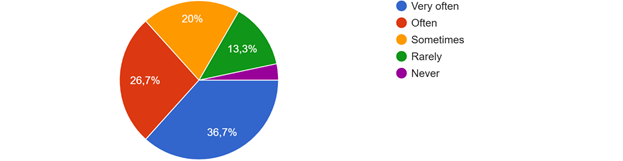
Figure 1 – Frequency of using authentic materials in studies and teaching practice
Note: compiled by the authors based on the results of the present study.
2. Understanding of the concept of authentic materials
Self-assessments of conceptual understanding were generally positive. A high or very high level of understanding was reported by 20 participants (66.7%), while 5 participants (16.7%) selected the moderate level. Limited understanding was indicated by 4 participants (13.3%), and 1 participant (3.3%) reported minimal familiarity with the concept. These results indicate that the notion of authenticity is familiar to most participants, although not equally consolidated across the sample (see Figure 2).
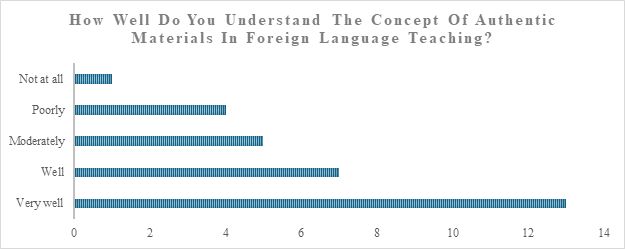
Figure 2 – Level of conceptual understanding of authentic materials
Note: compiled by the authors based on the results of the present study.
3. Confidence in selecting authentic materials
Confidence in selecting authentic materials aligned with lesson objectives varied among participants. High or very high confidence was reported by 19 participants (63.3%), 5 participants (16.7%) selected the moderate level, 4 participants (13.3%) reported lower confidence, and 2 participants (6.7%) indicated little or no confidence. This variation points to uneven self-assessed development of selection-related skills (see Figure 3).
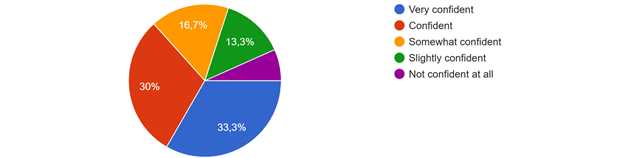
Figure 3 – Confidence in selecting authentic materials aligned with lesson objectives
Note: compiled by the authors based on the results of the present study.
4. Confidence in adapting authentic materials to learners’ proficiency levels
Adaptation appeared to be a more demanding component of self-assessed readiness. High confidence in adapting materials was reported by 16 participants (53.3%), while 9 participants (30.0%) assessed their confidence as moderate and 5 participants (16.7%) reported lower confidence. These results identify adaptation to learners’ proficiency levels as a key area for further methodological support (see Figure 4).
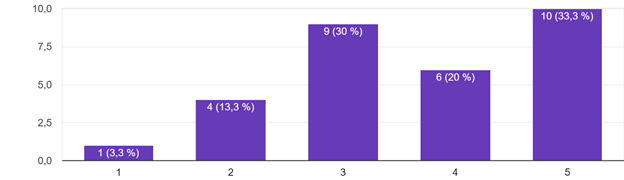
Figure 4 – Confidence in adapting authentic materials to learners’ proficiency levels
Note: compiled by the authors based on the results of the present study.
5. Experienced difficulties in using authentic materials
Overall difficulty in working with authentic materials was assessed at a moderate level, with a mean score of 3.17. Responses were distributed across the scale, indicating that participants viewed authentic materials as neither excessively difficult nor entirely unproblematic. This result reflects a perception of authenticity as pedagogically valuable but methodologically demanding.
In the open-ended responses, participants most frequently identified linguistic complexity, implicit cultural references, and the time required for material selection and adaptation as challenges. These responses indicate awareness of the need to mediate authentic content in relation to learners’ proficiency levels and instructional objectives (see Figure 5).
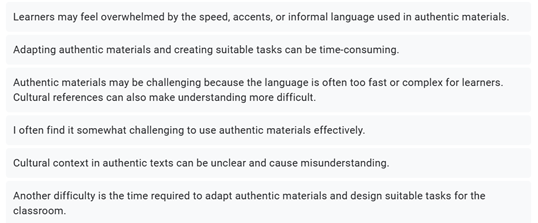
Figure 5 – Examples of participants’ reported difficulties in using authentic materials
Note: compiled by the authors based on the results of the present study.
At the same time, participants did not generally describe authentic materials as unmanageable. Their responses instead emphasized the need for structured methodological support, guided practice, and experience in instructional decision-making.
Taken together, the results identify areas in which practice-oriented pedagogical training may strengthen participants’ confidence and perceived readiness.
IV. DISCUSSION
The findings indicate that participants encounter authentic materials regularly, but their self-assessed methodological readiness is uneven. This pattern is consistent with literature that treats authenticity as a pedagogical relationship among materials, learners, purposes, and tasks rather than as an inherent property of a text [1, 2, 4].
Although 63.3% of participants reported frequent or very frequent use, confidence in selection and especially adaptation was lower. Exposure therefore should not be interpreted as demonstrated competence; effective materials use requires principled evaluation and decisions about how coursebook and supplementary resources serve particular learners and instructional aims [2, 7, 8].
Participants’ generally positive conceptual self-assessments coexisted with lower confidence in adaptation. This finding is compatible with Richards’s view of teacher competence as a combination of knowledge, teaching skills, contextual judgment, and reflection rather than theoretical knowledge alone [6].
Reported difficulties related to linguistic complexity, cultural references, and preparation time resemble practical challenges identified in previous studies and in teachers’ accounts of using authentic materials [3, 5, 12]. Because the present study relied on self-report, these results describe participants’ perceptions and cannot establish their actual classroom performance.
Overall, participants’ self-assessed methodological readiness appears to be in formation. Teacher education should provide guided practice in selecting, adapting, and designing tasks around authentic materials, followed by performance-based feedback. Such preparation is especially important because pedagogical effectiveness depends on materials evaluation and adaptation rather than on authenticity alone [4, 8].
CONCLUSION
The present study examined pre-service foreign language teachers’ self-assessed methodological readiness to use authentic materials. Participants generally reported frequent engagement with authentic resources and positive conceptual understanding, while confidence in selection and especially adaptation remained uneven. The findings therefore describe perceived readiness rather than demonstrated methodological competence.
The results identify adaptation and task design as priority areas for practice-oriented training. Teacher education programs should combine theoretical preparation with guided materials evaluation, adaptation tasks, lesson planning, and feedback based on observable performance.
The findings are limited by the small convenience sample, the single-institution context, and reliance on a researcher-designed self-report questionnaire. Further studies should involve larger multi-site samples, validated measures, performance-based tasks, classroom observation, and longitudinal designs to examine how methodological readiness develops over time.
Conflict of Interest
Funding
Bibliographic Reference
URL: https://world-science.ru/en/article/view?id=34429 (accessed: 04/10/2026).
DOI: https://doi.org/10.17513/ejnh.34429